A Beginner's Guide to Gemstone Hardness and Everyday Jewellery Wear
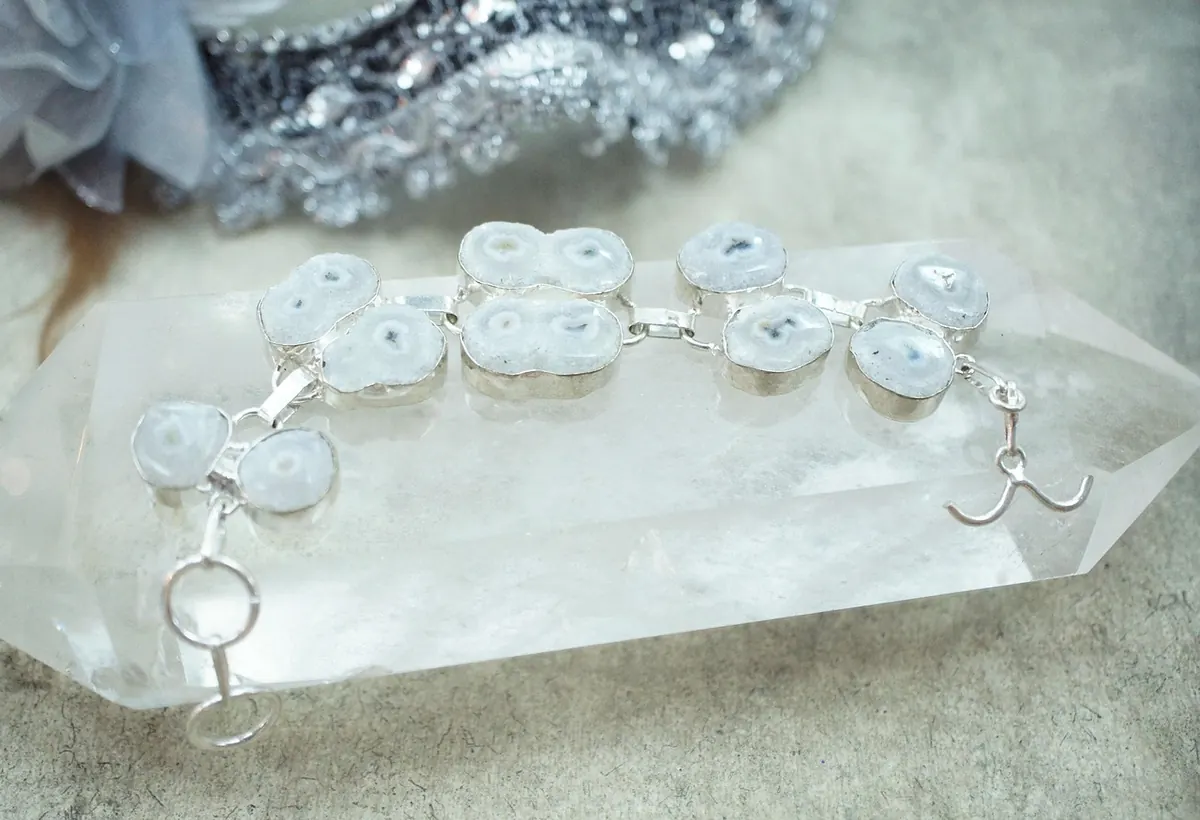
A gemstone that lives in a box stays perfect. A gemstone that comes with you to the supermarket, the garden and the gym does not. The difference between a stone that still looks crisp after ten years and one that looks tired after two is rarely about cost. It comes down to three things: how hard the stone is, how tough it is, and where on the body the piece gets worn.
What the Mohs Scale Actually Tells You
The Mohs scale ranks ten minerals by their resistance to scratching, from talc at 1 to diamond at 10. It was devised by the German mineralogist Friedrich Mohs in the early nineteenth century, and jewellers, gemmologists and lapidaries still use it because it answers a very practical question: will this stone pick up marks in ordinary use?
A few everyday anchors make the numbers easier to picture. A fingernail sits at roughly 2.5. A copper coin is around 3.5. A steel knife blade and window glass both land near 5.5. Quartz, which makes up most beach sand and a great deal of household dust, is a 7.
That last point matters more than it sounds. Fine quartz dust is everywhere, and any stone below 7 will slowly lose its surface polish to it. The shine dulls long before anything cracks.
One caution: the scale is not linear. Diamond at 10 is very much harder than corundum at 9, not slightly harder. Nor does it say anything about toughness, which is the ability to survive a knock without chipping. Hardness and toughness are separate properties, and the second one surprises more buyers than the first.
Hardness Is Not Toughness
Emerald is the classic example. At around 7.5 to 8 it is harder than quartz, yet emeralds chip readily, because most contain internal fractures and inclusions that act as weak points. Jade, at roughly 6 to 7, is far softer but extraordinarily tough. Its interlocking crystal structure resists breaking so well that it was carved into blades and tools long before anyone carved it into ornaments.
Cleavage matters too. Some minerals split cleanly along internal planes when struck. Topaz, a hardy 8, has perfect cleavage in one direction, so a sharp knock in the wrong place can take a corner off a stone that is harder than amethyst. Moonstone, a feldspar at around 6, behaves in a similar way.
Then there are the materials that barely behave like minerals at all. Opal holds water and dislikes sudden temperature changes and long dry spells. Pearls are soft, easily dulled by perfume and hairspray, and affected by the acids in perspiration. Amber, turquoise and malachite are softer still, and turquoise and malachite are porous.
Where You Wear It Changes Everything
Risk is not spread evenly around the body, and this is the most useful thing to understand before you buy.
Rings take the most punishment by a wide margin. Your hands meet doorframes, car doors, shopping trolleys, keys and gym equipment all day. A ring worn daily accumulates a haze of fine scratches, and a stone in the 5 to 6 range will look noticeably flat within a few years. Rings on your dominant hand, and on the index finger, collect more knocks than a ring on a little finger.
Bracelets come next. They knock against desks and door handles, and they scrape against whatever else is on your wrist. Wear an opal bracelet beside a diamond one and the opal will lose every time.
Necklaces and pendants are the safest home for delicate stones. A pendant hangs clear of most surfaces and rarely strikes anything hard. Earrings are similar: a drop swings freely and seldom meets anything solid, though it can catch in hair, scarves and headphone cables.
Sorting Stones by Everyday Suitability
As a rough guide for pieces you intend to wear often:
- Hardy enough for daily rings: diamond, sapphire, ruby and spinel. Sapphire and ruby are both corundum, and they make superb ring stones — hard, tough and available in a wide range of colours.
- Fine with care: amethyst, citrine, garnet, tourmaline, aquamarine, morganite, topaz and peridot. These can be worn regularly, but expect a polish refresh at some point, and keep topaz out of tall prong settings.
- Better as pendants, earrings and occasional rings: opal, pearl, turquoise, moonstone, lapis lazuli, tanzanite, amber, malachite and fluorite. Lovely stones, wrong job for a ring you never take off.
Repair is possible, but it has limits. A scratched stone can be re-polished, and a chipped one recut, though recutting means losing metal from the setting and often weight from the stone.
Settings and Metal Do Half the Work
A bezel or rub-over setting wraps metal around the edge of the stone, protecting the girdle — the thin rim most vulnerable to chipping. For softer stones, active hands, or anyone who works with their hands, a bezel is often the smarter choice. Claw settings show more of the stone and let more light in, but tall claws catch on knitwear and doorframes.
If you stack rings, put a thin plain band between a diamond ring and anything softer. Otherwise the harder stones grind away at their neighbours every time your hand moves.
There is also a thoroughly sensible arrangement many people land on: a plain band or a hard-stone ring for everyday wear, and the more delicate piece for occasions. Nothing is lost, and the good ring stays good.
Small Habits That Save Stones
Most damage is avoidable, and the fixes are cheap.
- Put jewellery on last when you dress, and take it off first at night.
- Remove rings for cleaning, gardening, DIY, sport and swimming. Household cleaners, chlorine and abrasive pastes are all unkind.
- Store pieces separately in soft pouches or a compartmented box. A diamond will scratch everything it touches, including other diamonds.
- For most stones, warm water with a drop of washing-up liquid and a soft brush is plenty. Skip ultrasonic and steam cleaners for emerald, opal, pearl, turquoise, amber, malachite and any treated or fracture-filled stone. Keep perfume, hairspray and sunscreen away from pearls and porous materials.
- Have claws checked once a year. Tightening a loose stone is quick and inexpensive; replacing a lost one is not.
If you are insuring a piece, check with your insurer about the valuation they need and how they treat
Photo: starbright / Pixabay